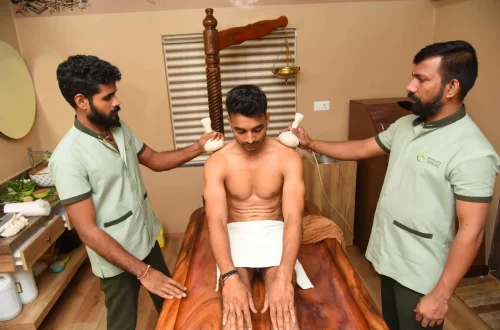
Manal Kizhi is a unique Ayurvedic sudation therapy where heated sand is tied in a cloth bolus (Potli) and applied to the body to relieve pain, stiffness, and swelling. This therapy is particularly useful in conditions caused by Vata and Kapha imbalances, such as arthritis, muscular pain, joint stiffness, and inflammation.
Unlike herbal bolus therapies, Manal Kizhi uses dry heated sand, which helps absorb excess moisture, reduces stiffness, and improves blood circulation. It is particularly effective for rheumatoid arthritis (Aamavata), osteoarthritis (Sandhigata Vata), and chronic musculoskeletal disorders.
This therapy is beneficial for:
Osteoarthritis (Sandhigata Vata)
Rheumatoid arthritis (Aamavata)
Muscle stiffness and cramps (Mamsagata Vata)
Joint swelling and inflammation (Sandhi Shotha)
Sciatica (Grudhrasi)
Paralysis and post-stroke rehabilitation (Pakshaghata Chikitsa)
Low back pain (Kati Shoola)
The patient is made to lie comfortably on a Droni (therapy table). A gentle Abhyanga (oil massage) may be performed using medicated oils like Dhanwantharam Taila or Sahacharadi Taila. The sand is heated in an iron pan until it reaches a tolerable temperature and is then tied into a cloth bolus (Kizhi).
The heated sand bolus is rhythmically applied to the affected areas in circular or tapping motions. The therapist continuously adjusts the bolus temperature by reheating it as required. The therapy lasts for 30–45 minutes, ensuring deep heat penetration into the muscles and joints. The procedure is repeated for 7–14 days, based on the severity of the condition.
The patient is allowed to rest for 15–20 minutes after therapy. A mild herbal bath with warm water may be advised. The patient is advised to avoid exposure to cold air immediately after the therapy. Dietary and lifestyle modifications may be suggested to maintain Dosha balance.
Manal Kizhi is a highly effective Ayurvedic heat therapy using sand boluses to relieve pain, stiffness, and swelling. It is particularly useful for joint disorders, muscle pain, and neurological conditions. The dry heat application helps absorb excess moisture, improve blood circulation, and enhance flexibility.