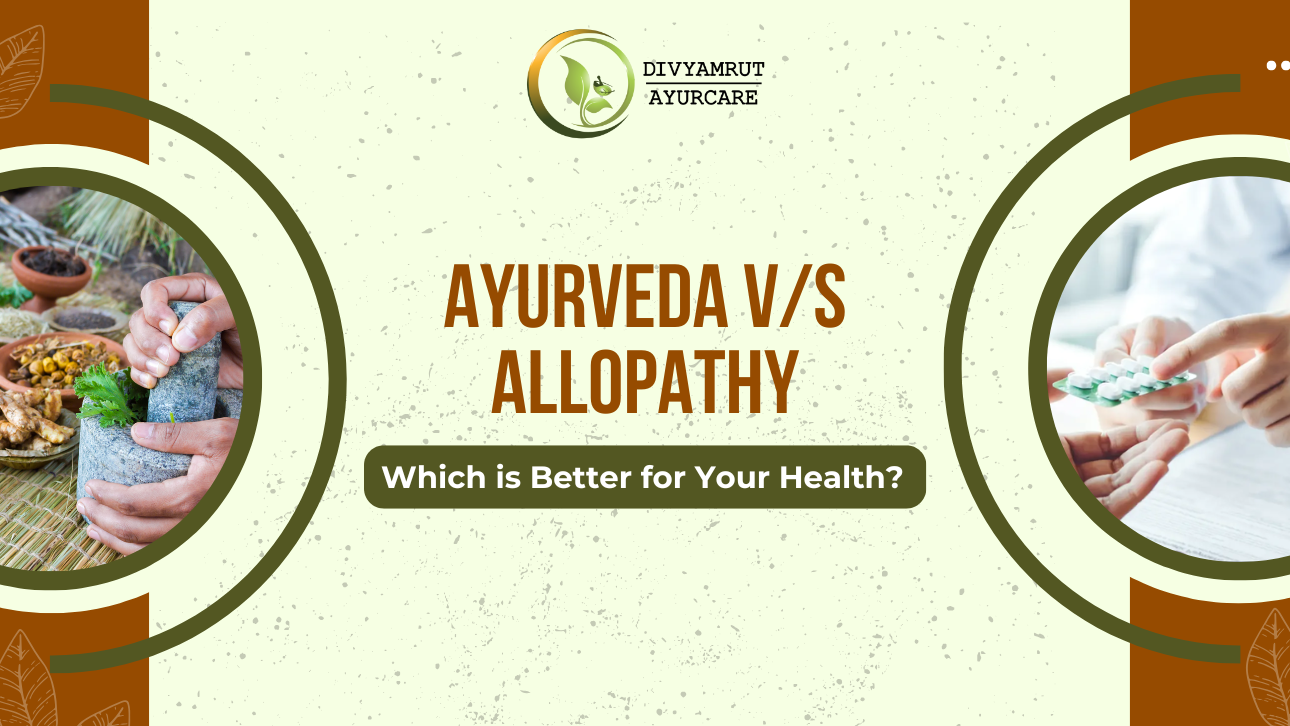
When it comes to healthcare, two different medical systems often come to mind: Ayurveda and Allopathy. Ayurveda is an ancient Indian system of natural healing that emphasizes balance, while Allopathy (modern Western medicine) relies on scientific research, drugs, and surgery to treat symptoms and diseases.
The debate over “Ayurveda vs Allopathy: Which is better for your health?” depends on the condition being treated, patient preferences, and treatment goals. This comprehensive guide explains the differences between the two systems, their respective strengths, and offers insights into how they can complement each other.

Ayurveda is a 5,000-year-old holistic medical system from India that focuses on achieving balance in the body, mind, and spirit. It employs natural herbs, minerals, dietary changes, and lifestyle modifications to promote overall wellness and prevent diseases.

Allopathy, commonly known as modern or Western medicine, relies on scientific research and evidence-based practices to diagnose, treat, and prevent diseases. It typically focuses on treating the symptoms or specific diseases using pharmaceutical drugs, surgery, and other advanced technologies.
The key differences between Ayurveda and Allopathy can be summarized as follows:
| Aspect | Ayurveda | Allopathy |
|---|---|---|
| Approach | Holistic (treats the body, mind, and spirit) | Symptom-based (focuses on treating specific diseases) |
| Treatment | Natural remedies, herbs, and dietary changes | Pharmaceutical drugs, surgery, and advanced technologies |
| Focus | Preventive care and maintaining balance | Treating symptoms and curing diseases |
| Side Effects | Minimal side effects due to natural ingredients | Higher possibility of side effects from synthetic drugs |
| Customization | Personalized based on individual dosha or constitution | Standardized treatment for all patients |
There is no one-size-fits-all answer, as the better approach depends on the specific health condition, patient preferences, and treatment goals. For preventive care and lifestyle-related issues, Ayurveda’s holistic approach may offer long-term benefits. Conversely, Allopathy is indispensable for acute conditions and emergencies where immediate relief is crucial.
For chronic diseases, a combined approach can be beneficial. Allopathy can manage symptoms and prevent complications, while Ayurveda supports long-term health through detoxification, dietary changes, and stress management.
Many patients opt for an integrative approach that leverages the strengths of both systems. Allopathy offers quick symptom relief, while Ayurveda works to restore balance and promote overall wellness.
Ayurveda: Generally has minimal side effects due to its use of natural ingredients. However, using treatments without professional guidance may sometimes lead to imbalances.
Allopathy: Medications and procedures can have side effects ranging from mild to severe, although they are managed under strict clinical supervision.
Both Ayurveda and Allopathy have unique strengths. Ayurveda is ideal for those seeking a natural, preventive approach, while Allopathy is critical for acute and emergency interventions. For many, an integrative approach combining both systems offers the best pathway to long-term health and well-being.
1. What is the main difference between Ayurveda and Allopathy?
Ayurveda focuses on holistic healing and natural remedies, while Allopathy treats specific diseases using pharmaceutical drugs and surgical interventions.
2. Is Ayurveda better than Allopathy for chronic conditions?
Ayurveda can be more effective for long-term management of chronic conditions by addressing the root cause, whereas Allopathy provides immediate symptom control.
3. Can I combine Ayurveda and Allopathy?
Yes, many patients benefit from an integrative approach that combines the immediate relief of Allopathy with the holistic, preventive benefits of Ayurveda.
4. Does Ayurveda have side effects?
When administered by a qualified practitioner, Ayurvedic treatments have minimal side effects.
5. Is Allopathy better for emergencies?
Yes, Allopathy is generally more effective in emergency situations due to its rapid action and scientifically tested treatments.
6. Which is more cost-effective: Ayurveda or Allopathy?
Ayurveda may be more cost-effective in the long run for preventive care and managing chronic conditions, while Allopathy might be necessary for acute treatment, often at a higher immediate cost.
7. Are Ayurvedic treatments scientifically proven?
Many Ayurvedic treatments have been used for centuries. While ongoing research continues, Allopathy is typically supported by rigorous scientific studies and clinical trials.
8. Can Ayurveda cure all diseases?
Ayurveda aims to prevent and manage diseases by restoring balance in the body, but it may not be suitable for every condition, especially those requiring immediate or emergency care.